Loading…
History and legend
Five thousand years on a rocky spur
Prehistoric sacred place, border fortress, customs post between two states, refuge of a saint, ruin struck by cannon and finally a page in a novel: few places this small have changed role so many times.
The place and its names
The castle stands at about 420 metres on a limestone spur called Tremasasso, the last outcrop of Mount Magnodeno before the mountain drops towards the Adda and Lake Garlate. It lies in the municipality of Vercurago, right on the boundary with Lecco: a boundary that, as we will see, was for centuries much more than a line on a map.
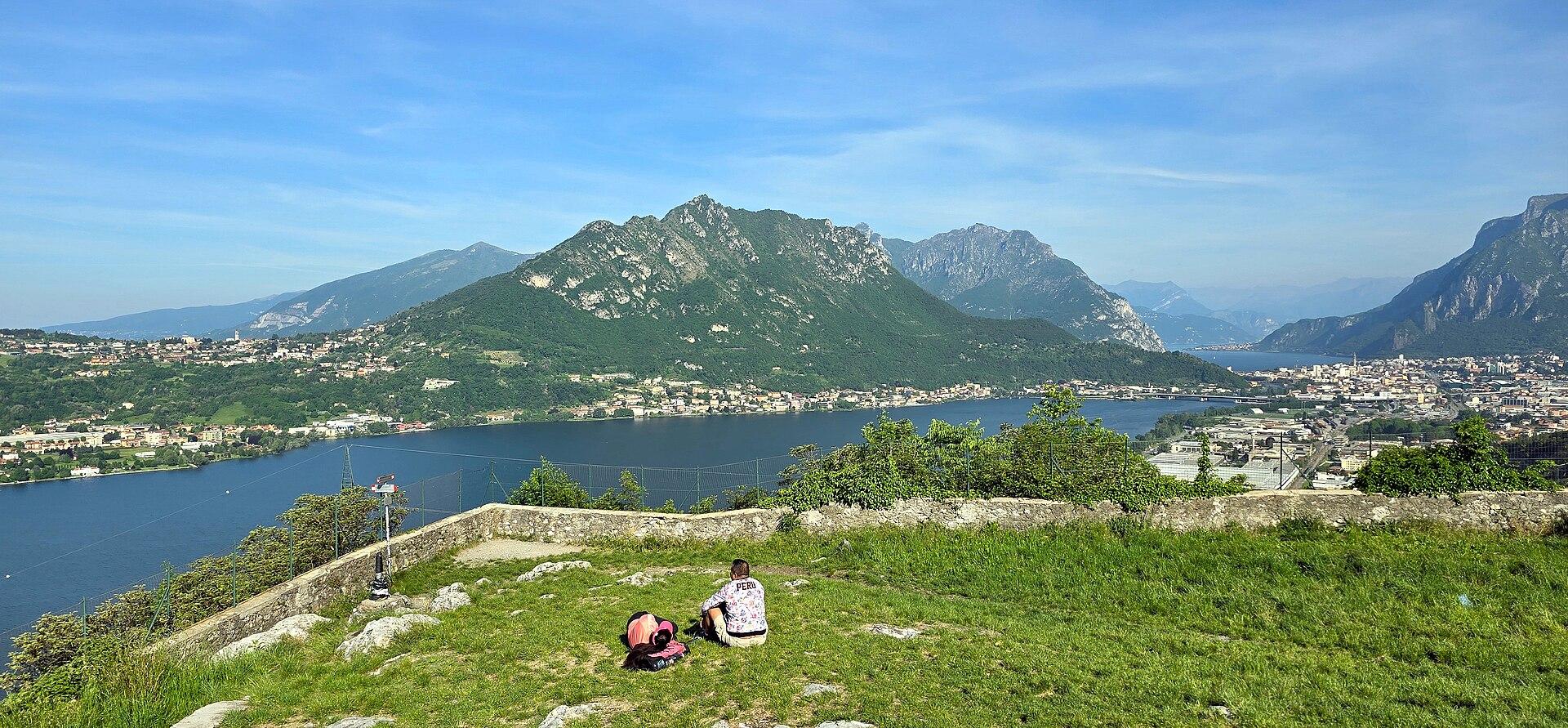
From up here the view sweeps from Brianza to the Grigne peaks and, above all, commands the only easy passage along the river. It is this position, not the beauty of the view, that made the hill’s fortune and misfortune.
Rocca di Vercuragothe oldest name, tied to the village and to its military role
Castello di Somascaas it is called by those who climb from the hamlet and the Sacro Monte
Castle of the Unnamedthe name born with Manzoni’s novel, now the best known
The timeline
- Prehistory≈ 3000 BC
Already a special hill
In 2025, just below the ruins, a fragment of a Copper Age stele statue came to light. In the Chiuso area at the foot of the hill, scholars also point to what may have been a prehistoric place of worship: a sign that this spur mattered to the valley’s communities millennia before any wall.
- Middle Ages13th–14th century
The fortress is born
A fortification is built on the Tremasasso to command the passage between Lake Garlate and the plain. Sources vary between the 13th and 14th centuries for its origins; what is certain is that it controlled the road along the Adda, the natural route between Lecco and Bergamo.
- 1426–1454
Between Milan and Venice
In the wars between the Duchy of Milan and the Republic of Venice, Vercurago passes to Venice as early as 1426; after changing hands it becomes Venetian for good with the Peace of Lodi in 1454. From then on the Adda is the border between the two states, and the castle sits right on the frontier. Sources disagree on the dates in between.
- Early modern1509
The French and the League of Cambrai
During the War of the League of Cambrai against Venice, several sources say French troops partly destroyed the fortress. It marks the start of the castle’s slow military decline.
- 1511
A Venetian soldier in chains
Far from here, at Castelnuovo di Quero near Treviso, the young Venetian nobleman Girolamo Miani (Emiliani), born in 1486, defends a fortress against the League’s troops and is captured. Tradition says that in prison he underwent a conversion and that his release was owed to Our Lady: the scene told in the first chapels of the climb.
- 1531–1534
From Venice’s orphans to Somasca
Leaving military life behind, Jerome devotes himself to children left alone by war, famine and plague: first in Venice, then in Bergamo and Milan, where he founds orphanages. In 1534 he chooses Somasca, in the shadow of the fortress, as home for his community: the future Somascan Fathers.
- 1534–1535
The Miracle Spring
At the Valletta, the hermitage where Jerome withdrew to pray, tradition tells that water sprang from the rock for his boys. The spring is still there along the climb to the castle.
- 8 February 1537
The saint’s death
Caring for the plague victims of the valley, Jerome falls ill himself and dies in Somasca on 8 February 1537. Chapel number 10 on the Way of the Chapels recalls the little house where he died.
- After 1509
A customs post on the frontier
With the Adda as the border between the Milanese and the Republic of Venice, a customs post is set up among the ruins of the fortress. Sources disagree on when: some link it to the Peace of Lodi, others to the years after the damage of 1509.
- 26 October 1628
To the Somascan Fathers
According to local sources, the Limonta family of Vercurago, owners of the castle, hand it over to the Somascan Fathers.
- 1747 · 1767
The Sacro Monte takes shape
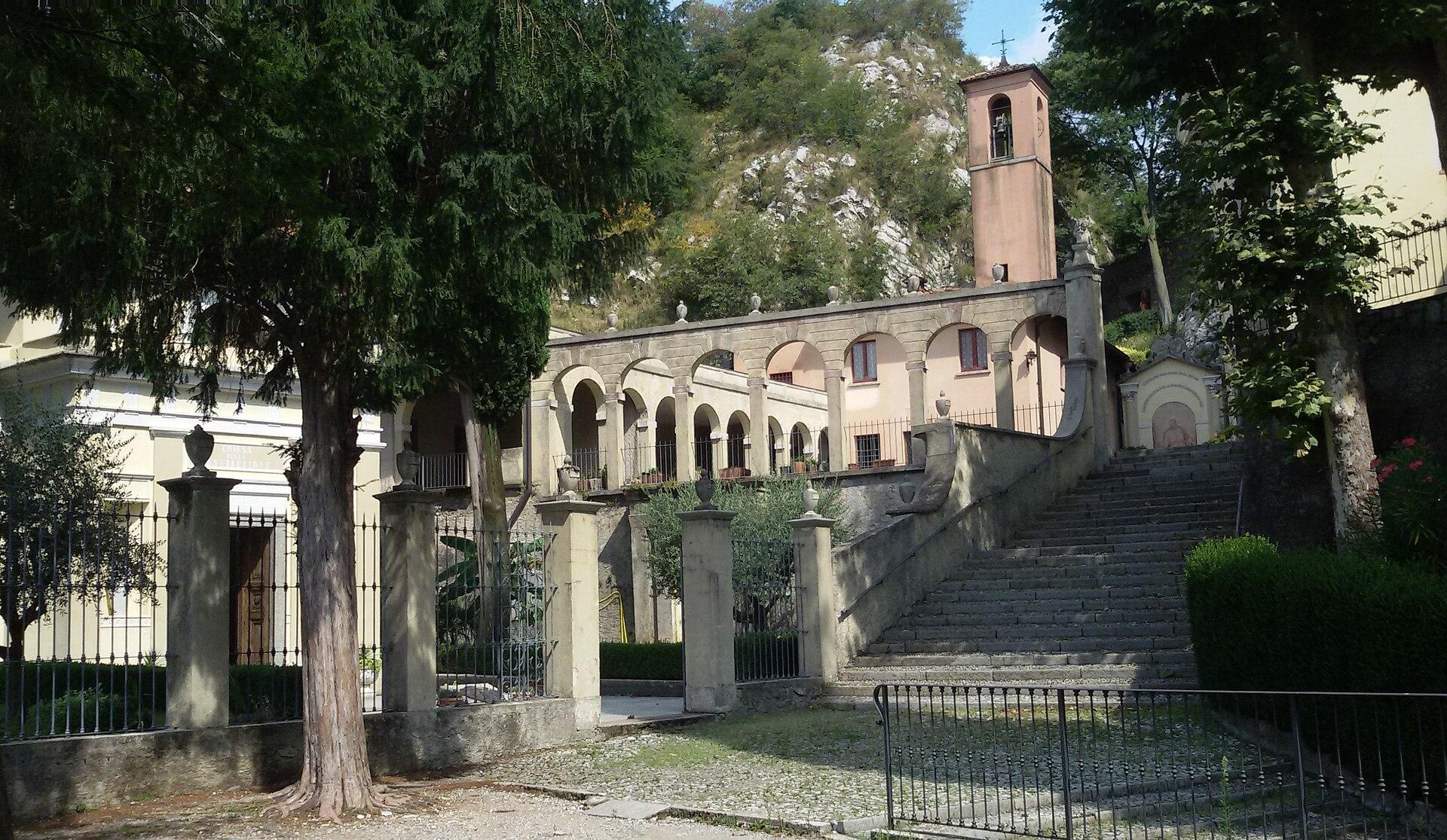
Jerome is beatified by Benedict XIV in 1747 and canonised by Clement XIII in 1767. Somasca becomes a place of pilgrimage, and along the climb to the fortress the route of chapels telling his life develops.
- Modern1797
The end of a border
With the fall of the Republic of Venice, swept away by Napoleon’s campaigns, the border on the Adda disappears after almost three and a half centuries, and with it the reason for the customs post on the hill.
- April 1799
Russian cannon fire
In the battle for Lecco between the French and the Austro-Russian troops led by Suvorov, the hill becomes a battlefield one last time: Russian cannon fire breaches the walls and the fortress is razed to the ground.
- Late 19th century
The Somascan rebuilding
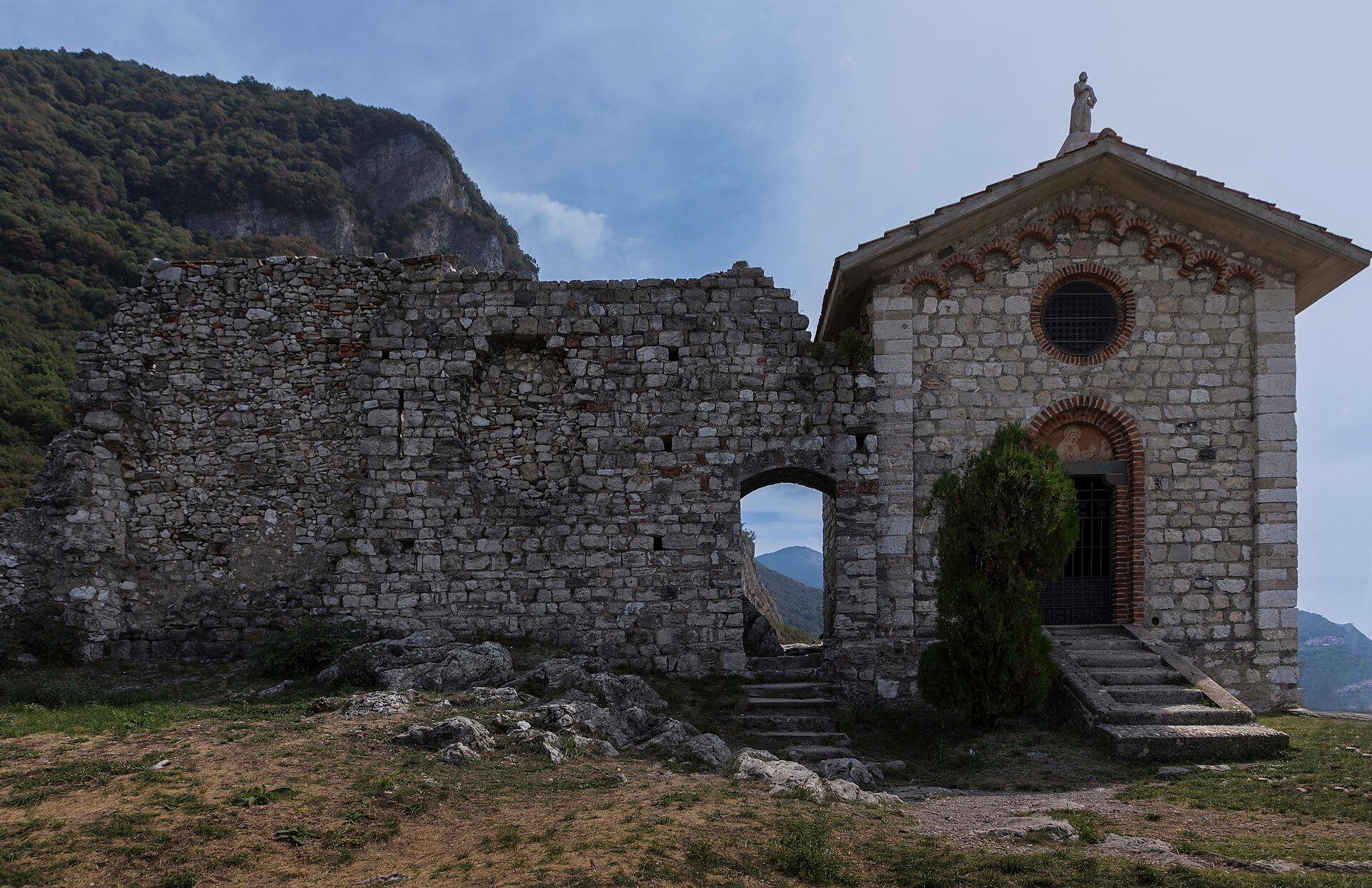
Towards the end of the 19th century the Somascan Fathers partly rebuilt the fortress razed in 1799. Sources do not say in detail which parts date from that work: what we see today is a mix of medieval ruins and later restoration. One fact is certain: the chapel of Sant’Ambrogio, which forms the entrance and is medieval in origin, was rebuilt in 1895 by the architect Antonio Piccinelli.
- 1821–1842
Manzoni writes the Unnamed
Alessandro Manzoni, who spent his childhood in the family villa at Caleotto in Lecco, works on the novel from 1821 (Fermo e Lucia), publishes it in 1827 and rewrites it until the final 1840–42 edition. The castle of the Unnamed in chapter XX has no exact address, but tradition recognises it in these ruins, which Manzoni could see from his Lecco.
- 1830
The name enters the maps
Three years after the novel came out, a map of Lecco is published that for the first time marks “the remains of the castle of the Unnamed”: literature reshapes geography, and the Rocca di Vercurago takes the name we know it by. Manzoni himself, however, never confirmed the link.
- 20th century1910
A protected monument
On 5 July 1910 the “remains of the medieval castle” in Somasca are formally listed as a protected heritage site under the 1909 Italian law on antiquities and fine arts.
- 1928 · 1992
Patron of orphans, a new province
In 1928 Pius XI proclaims St. Jerome Emiliani universal patron of orphans and abandoned youth. In 1992 the province of Lecco is created: Vercurago and the Valle San Martino, until then part of the province of Bergamo, become part of it.
- TodayRecent years
The castle opens up again
After years of closure, the stairway up to the ruins has been reopened and the path made safe. Since 2025 the excavations below the fortress, with the discovery of a Copper Age sanctuary, have also put the hill in the archaeology news.
- Today
A viewpoint for everyone
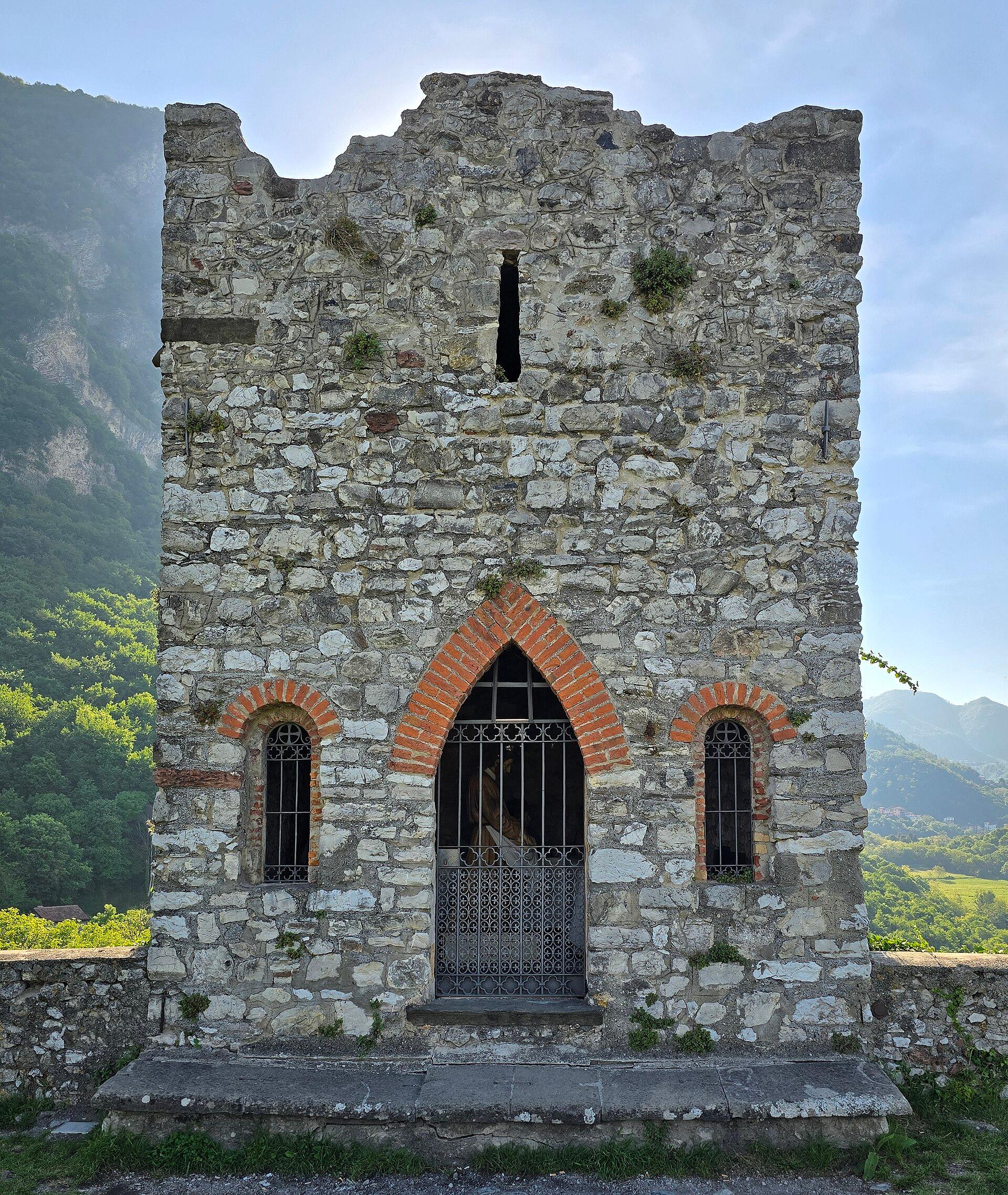
What remains are the walls, the square tower and the gatehouse, next to the chapel of Sant’Ambrogio and the great cross. Entry is free, and the terrace is one of the best-loved viewpoints around Lecco, especially at sunset.
Did you know?
A monument since 1910
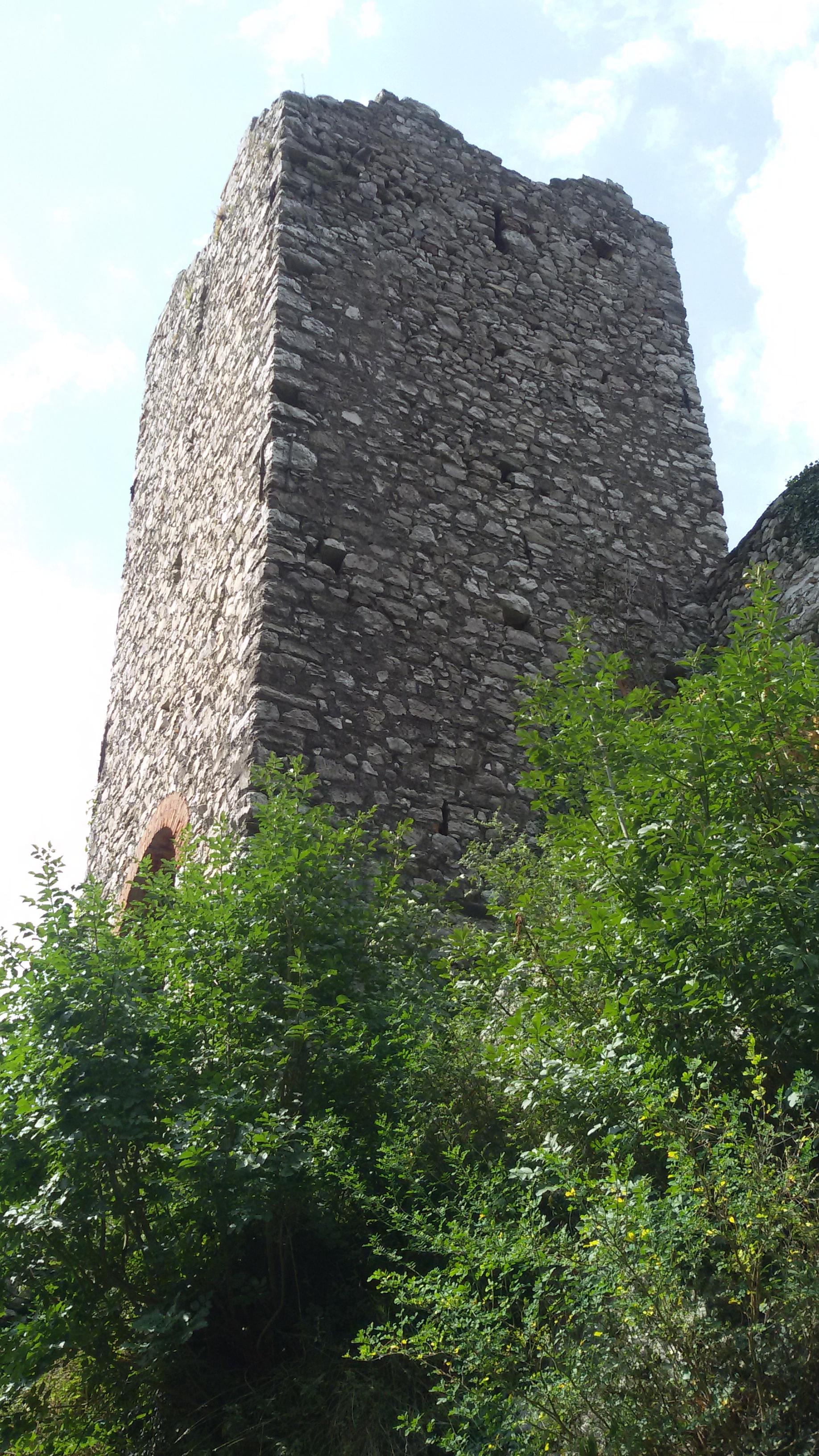
Officially the ruins are the “remains of the medieval castle”: protected since 1910, they keep a truncated tower and stretches of the outer walls.
The Malanotte
In the novel the Malanotte is the inn guarded by bravi at the foot of the climb to the castle. In Somasca a building is still known as the “Taverna della Malanotte”.
Who the Unnamed really was
The most cited model is Francesco Bernardino Visconti, lord of Brignano, an overbearing 17th-century nobleman who later converted, described in the chronicles of the time.
Not the only candidate
Other Lombard castles claim to be “the castle of the Unnamed”: Manzoni never located it, and part of the Somasca castle’s charm lies in this mystery.
Two states a few metres apart
For centuries anyone climbing to the castle crossed a frontier: the State of Milan underfoot, the Republic of Venice before their eyes.
This account is based on the sources listed below. Scholars disagree on some dates, and the link with Manzoni rests on tradition rather than documents: we tell it as such.
Sources
- Comune di Vercurago – La Storia
- Wikipedia – Castello dell’Innominato
- Wikipedia – Storia di Vercurago
- Lombardia Beni Culturali – scheda architettura
- Santi e Beati – San Girolamo Emiliani
- Cathopedia – San Girolamo Emiliani
- Pro Loco Vercurago – Il Castello dell’Innominato
- preboggion.it – Castello dell’Innominato
- Il Giorno – la scala dell’Innominato riaperta